
Every electrician knows this rule before they wire their first house. Most homeowners have never heard of it. It's called the "2 Outlet Rule," and once you understand it, you'll walk through your home and notice problems you've been living with for years. I'll break down what it means, why it matters, and what to do about it.
Your Outlets Aren't Where You Think
You already know the feeling. There's a power strip crammed behind the couch with six things plugged into it. An extension cord stretches across the kitchen counter because the only outlet is behind the coffee maker. Two phone chargers compete for a single bathroom plug. Every room has its own little workaround, and you've just learned to live with it.
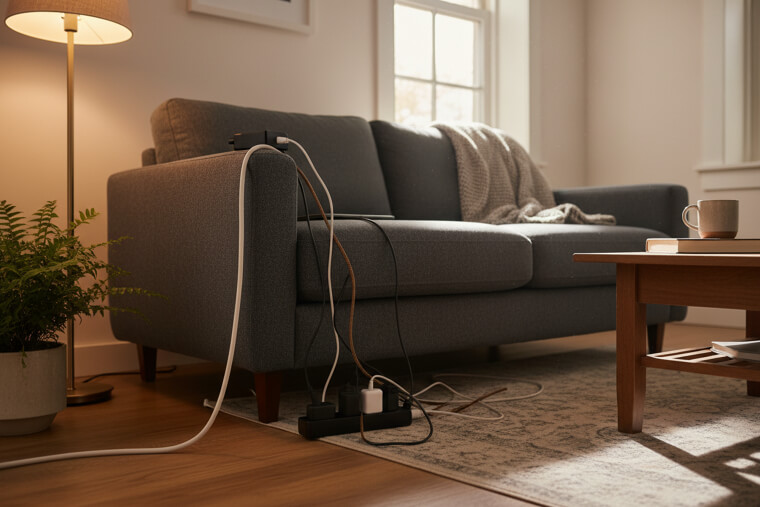
But here's what most people never consider — this isn't just a minor annoyance. It's a design problem baked into your home's walls. And electricians? They spot it the second they walk through your door, using a rule most homeowners have never heard of.
What the 2 Outlet Rule Actually Means
Here's the rule hiding in plain sight: the National Electrical Code states that no point along any wall should be more than 6 feet from an outlet. Do the math, and that means you need an outlet roughly every 12 feet. Electricians shorthand this as the "2 outlet rule" because in practice, you should always be within arm's reach of a plug — using nothing longer than a standard 6-foot appliance cord.
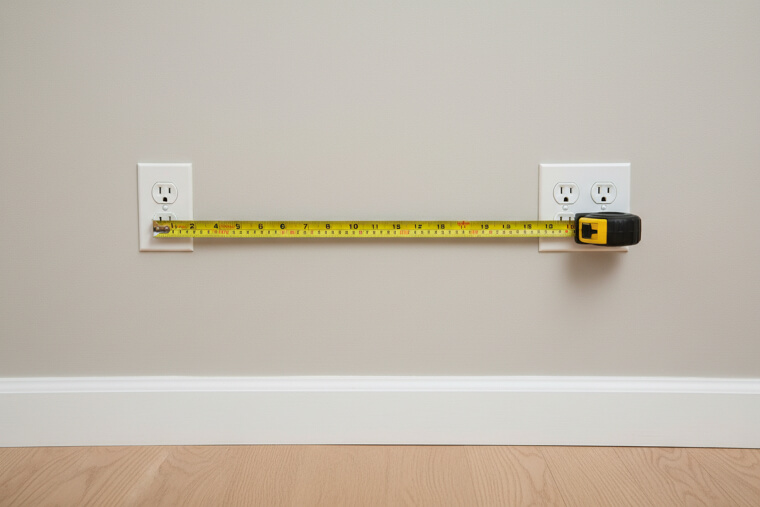
Now think about your own home. That long bedroom wall with one outlet in the corner? It's almost certainly not up to code. Homes built before the 1960s are the worst offenders, but even houses from the '80s and '90s fall short. The reason electricians chose 6 feet as the magic number is surprisingly practical.
Why 6 Feet Is the Magic Number
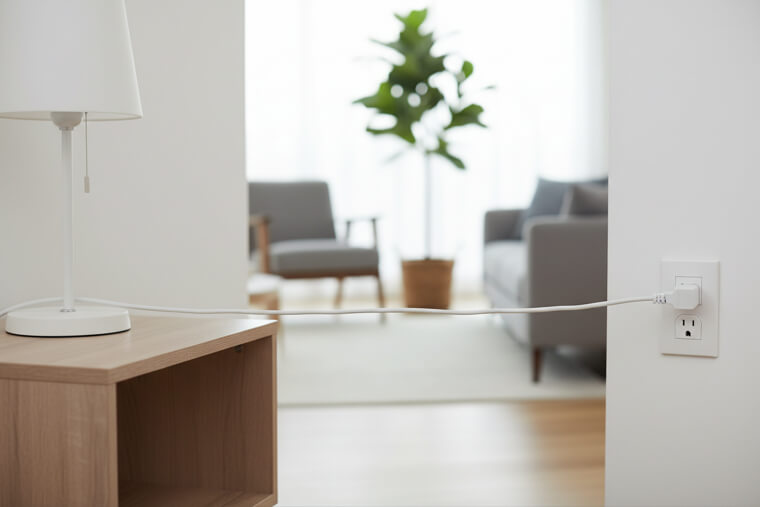
Here's what electricians know that most people don't: that 6-foot standard isn't arbitrary. It's the length of a typical appliance cord — your lamp, your vacuum, your phone charger. The code was literally designed so you'd never need anything longer. This means every extension cord in your living space is a red flag, not a solution. It's telling you the room doesn't have enough outlets. Professionals see extension cords the way a doctor sees a persistent cough — it's a symptom of something that needs fixing.
And if you think living room spacing sounds strict, kitchens and bathrooms play by an entirely different set of rules. The requirements there are even tighter — and the reasons why might genuinely surprise you.
The Rooms Where This Rule Gets Broken
Older bedrooms are the number one offender — one outlet on a wall, with a space heater, lamp, and phone charger all feeding through a single power strip. Basements and garages come next, often with circuits that were never designed for the tools and equipment people now use daily. Home offices are the newest danger zone, packed with monitors, routers, and printers daisy-chained into one overworked outlet. The Consumer Product Safety Commission links extension cord misuse to roughly 3,300 home fires every year.
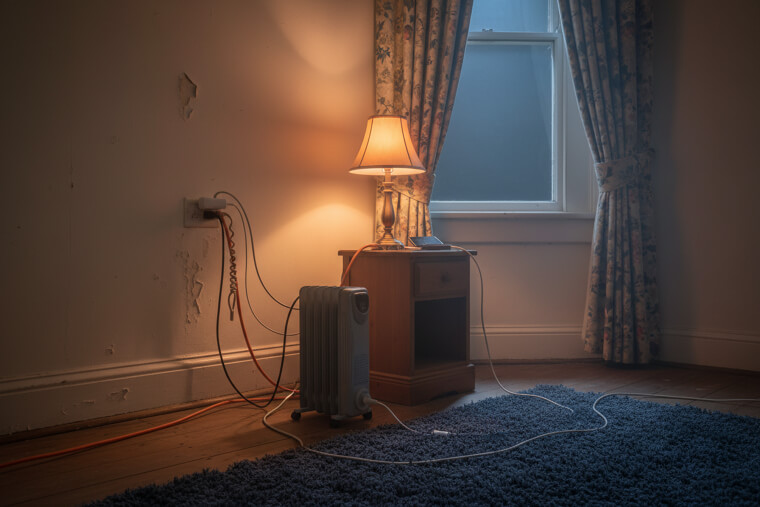
Think about that number. Now think about the room where your grandchild naps, or where your teenager falls asleep with a laptop charging on the bed. These aren't statistics — they're rooms just like yours. The good news? You can check your own home in about five minutes.
The Quick Walk-Through Electricians Do First
Here's the exact walk-through electricians do during a home inspection. Grab a tape measure or a 6-foot piece of string. Stand in any room and face one wall. Find the nearest outlet, then measure along the wall in both directions. If any stretch of wall is more than 6 feet from that outlet — or from the next one — that wall is underserved. Do this for every wall in the room, including short sections between doors and windows.

You'll probably find at least one wall that fails. Most people find two or three. Congratulations — you're now seeing your home the way a licensed electrician does. But when you get to the kitchen, the rules change completely.
Kitchens Play by Completely Different Rules
Remember that stricter kitchen rule we mentioned? Here it is: the National Electrical Code requires an outlet every four feet along countertop space — not every twelve. And any countertop section wider than 12 inches needs its own dedicated outlet. If your kitchen was remodeled before the mid-1990s, you're almost certainly nowhere close. The reason is raw power demand. Your microwave alone can pull 1,500 watts. Fire up a toaster on the same circuit and you're not just tripping a breaker — you're pushing wiring toward heat levels it was never designed to handle.
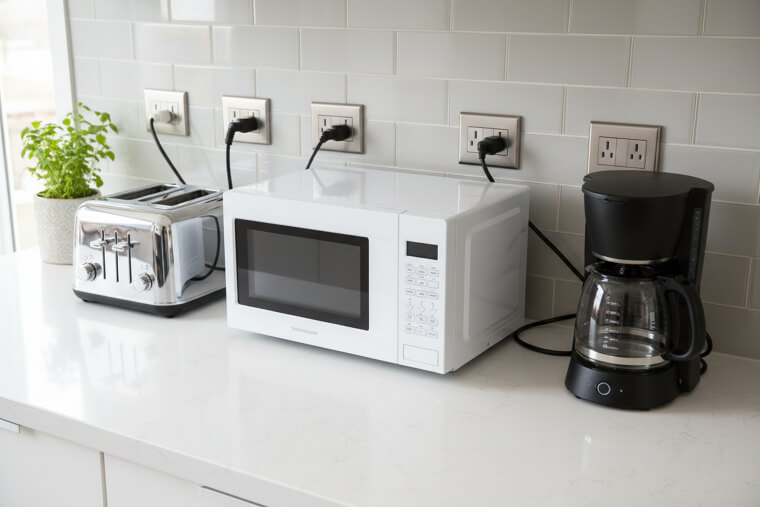
Most homeowners assume their older kitchen is perfectly fine because nothing bad has happened yet. But that assumption has a name in the electrical world — and your insurance company might have a very different opinion about it.
What "Grandfathered In" Really Means for You
Here's what "grandfathered in" actually means: no one will knock on your door and force you to rewire. Your city won't fine you. But your insurance company operates under completely different rules. After a fire, investigators trace the cause. If they find outdated wiring or missing outlets contributed to an extension cord overload that sparked the blaze, your claim can be reduced — or denied entirely. Insurers aren't bound by grandfather clauses. They're bound by what caused the damage.

Homeowners have lost tens of thousands in denied claims while believing they were fully covered. The code didn't protect them. The grandfather clause didn't protect them. The only thing that protects you is the actual condition of your wiring. And speaking of wiring you can't see — there's probably an outlet in your home right now that's doing more harm than good.
The Outlet Behind Your Furniture Is Useless
Every electrician has seen it — a heavy dresser or entertainment center shoved flush against the wall, completely burying an outlet. You probably have at least one right now. Here's what professionals know: that hidden outlet isn't just useless, it's actively dangerous. When plugs get compressed behind furniture, prongs bend and connections loosen. Heat builds up with nowhere to dissipate. And because you can't see the outlet, you'd never notice scorch marks, melting plastic, or a faint burning smell until it's too late.
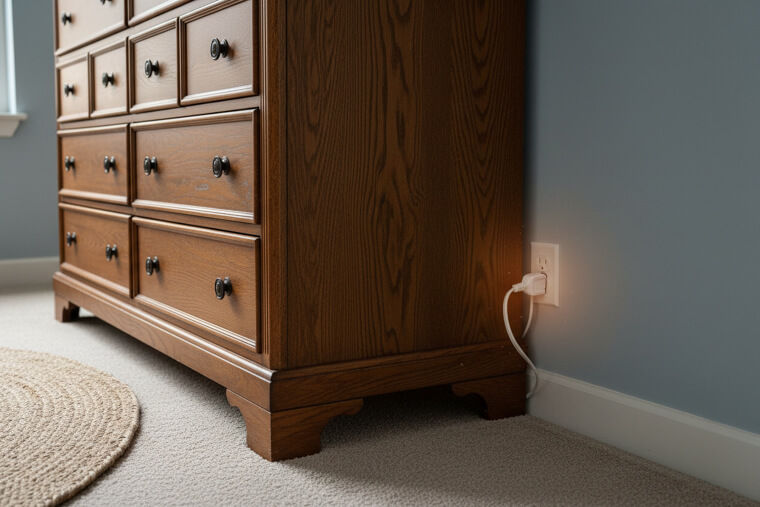
Meanwhile, you're running an extension cord from across the room to compensate — exactly the fire risk we talked about earlier. Think about your bedroom right now. Can you actually see every outlet? The good news is fixing this problem costs far less than most people assume.
Adding an Outlet Costs Less Than You Think
Here's the truth most homeowners never look up: adding a single outlet on an existing circuit typically costs $150 to $300. That's it. An electrician can usually finish the job in about an hour with minimal wall disruption — no ripping open entire rooms, no rewiring the house. The smart move? Walk through your home tonight and identify the one or two spots where extension cords or power strips are doing the heavy lifting.

Those are your priority walls. That's where a new outlet pays for itself in safety almost immediately. But before you call anyone, you should know the three warning signs that mean an outlet has already crossed into dangerous territory.
Three Signs Your Outlets Are Dangerously Overloaded
Go check these three things right now. First, place your hand flat on every outlet cover in your busiest rooms. Warm is a warning. Hot means stop using it immediately. Second, notice which breakers you keep resetting. A breaker that trips repeatedly in the same room is telling you that circuit is maxed out — too many devices sharing one path. Third, watch your lights. When the AC kicks on or someone runs the microwave, do the lamps flicker? That momentary dimming means the circuit is straining under competing demand.
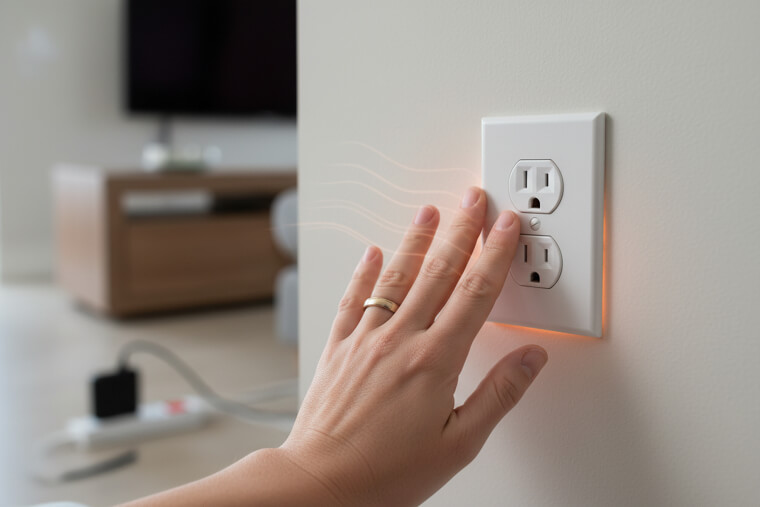
Each of these signs points back to the same root problem: not enough outlets forcing too many devices onto too few circuits. You've now got the knowledge to spot danger before it escalates — but when it's time to call a professional, knowing what to say makes all the difference.
What to Say When You Call an Electrician
Here's exactly what to say: ask for an "outlet and circuit audit." That phrase tells an electrician you're informed and specific — not someone who needs a full rewire sold to them. Then say this: "I'd like you to check outlet spacing against current NEC code and recommend only additions that address safety concerns or heavy-use areas." That single sentence eliminates ninety percent of upselling. A reputable electrician will start with kitchens, bedrooms, and home offices — the rooms where demand is highest and risk is greatest.

If they push a whole-house rewire before even doing the walkthrough, that's your sign to get a second opinion. You're not helpless in this conversation anymore. And honestly, everything you've learned across this entire article adds up to something bigger than outlet placement.
The Safest Home Is the One You Understand
Most of us walk through our homes every day without thinking about what's happening inside the walls. We flip switches, plug in chargers, and trust that everything behind the drywall is fine. Now you know what to look for. You know the spacing rule, the warning signs, the right questions to ask. That doesn't make you an electrician — but it makes you the kind of homeowner who doesn't just hope things are safe.

Think about who lives in your home. The grandkids crawling near baseboards. The people sleeping peacefully down the hall. You can't protect them from what you don't understand — but now you do. And that changes everything.Disclaimer: This story is based on real events. However, some names, identifying details, timelines, and circumstances have been adjusted to protect the privacy of the individuals involved. The images in this article were created with AI and are illustrative only. They may include altered or fictionalized visual details for privacy and storytelling purposes